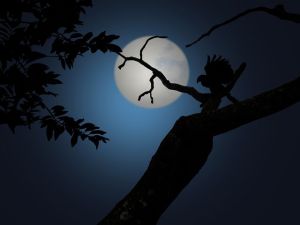
In the hushed moments when daylight surrenders to evening shadows, imagination unfurls its most vibrant plumage. Those transitional hours—neither fully day nor completely night—offer a unique sanctuary where mind wanders beyond the rigid boundaries of daily concerns. It is within this liminal space that my poetry often germinates, drawing sustenance from the fertile soil of uninhibited thought. As a poet navigating these twilight realms, I’ve come to recognise imagination not merely as a creative resource but as the fundamental architecture supporting all poetic endeavour.
Imagination functions as both telescope and microscope in the poet’s arsenal. It magnifies the seemingly insignificant, like a spider’s geometric precision or the momentary hesitation between heartbeats, while simultaneously compressing vast cosmic narratives into digestible metaphoric morsels. This dual capacity allows me to traverse infinite distances within the confined space of language, creating unexpected connections that might otherwise remain obscured by the veil of ordinary perception.
The Australian literary tradition exemplifies this imaginative elasticity. Our poetic lineage stretches from Aboriginal dreamtime narratives through colonial reconciliations with unfamiliar landscapes to contemporary explorations of multicultural identity. The common thread binding these diverse expressions is imagination’s power to transform experience into shared meaning. When Judith Wright writes of “the blood’s wild tree,” she’s not merely describing biology but reimagining the human body as a living ecosystem of ancestral memories. This transformative quality lies at imagination’s core, with its ability to reconfigure reality rather than simply reflect it.
My personal relationship with imagination follows twilight’s rhythms. As artificial lights flicker across suburban windows and magpies conduct their evening parliament, my mind begins its characteristic wandering. Unmoored from daytime practicality, thoughts drift toward unexpected harbours, even dangerous rocks. A half-remembered conversation from childhood suddenly collides with this morning’s news headline. The shapes and smells of my garden overlay memories of my grandmother’s beautiful hands and fine cooking. These seemingly random connections constitute imagination’s raw materials: the primordial soup from which poetic life eventually emerges.
Contrary to romantic notions of inspiration as divine visitation, poetic imagination thrives on receptivity rather than passive waiting. It requires cultivated attentiveness to sensory detail, emotional nuance, and thought’s subtle undercurrents. When evening brings its characteristic loosening of mental constraints, I actively surrender to associative thinking, allowing connections to form without premature judgment. This practice resembles meditation more than daydreaming, for it is a disciplined openness to possibility.
Imagination’s relationship with memory deserves particular attention. While memory ostensibly preserves the past, imagination continually reconstructs it. Those evening moments when memory surfaces often reveal imagination’s weaving fingerprints upon supposedly factual recollections. The chill of winter place might trigger childhood memories, yet imagination reconstructs those memories with the poetic deft touch.
The Australian landscape offers particularly rich material for my imaginative memory work. This continent’s ancient geography embodies paradoxical qualities—harshness and fragility, emptiness and abundance, familiarity and otherworldliness. When imagination engages with such contradictions, poetry emerges not as decorative language but as necessary reconciliation. The haunting quality of Australian poetry often stems from imagination’s struggle to bridge these existential tensions, creating what Les Murray called “the daylight moon” of poetic consciousness, creating a reality simultaneously ordinary and miraculous.
Language itself undergoes transformation through imaginative engagement. Words shed their utilitarian functions and reveal their extra-ordinary potential. “Gum” becomes simultaneously tree, adhesive, and mouth tissue. “Current” flows between electrical, temporal, and aquatic meanings. This semantic multiplicity creates linguistic ecosystems where meanings cross pollinate, producing hybrid significances that standard communication cannot accommodate. Evening’s contemplative space allows for me these verbal transformations to occur without day’s interference, creating my playground where language can perform beyond its conventional parameters.
The relationship between imagination and form remains particularly fascinating. Traditional structures—ballads, sonnets, villanelles, ghazals—might initially appear to constrain imagination. Yet paradoxically, these formal boundaries often catalyse imaginative breakthroughs by creating productive resistance. Like water finding pathways through stone, imagination discovers unexpected routes within formal limitations. During my evening reveries, I sometimes deliberately challenge arbitrary rules and conventional constraints to stimulate imaginative possibilities. These experiments frequently generate breakthrough moments where language performs unexpected acrobatics.
Technological postmodernity presents both challenges and opportunities for poetic imagination. Digital connectivity floods consciousness with information fragments that resist coherent synthesis. The evening hours once reserved for reflective thought now compete with screens emanating their peculiar hypnotic glow and addiction. Yet this very fragmentation mirrors poetry’s associative mechanisms. The hyperlinked nature of digital thinking resembles imagination’s nonlinear pathways. Contemporary Australian poets increasingly incorporate technological vocabularies and structures into their work, reimagining traditional lyric sensibilities within digital frameworks.
Imagination’s relationship with tangible reality remains contentious in poetic discourse. While some traditions emphasise imaginative transcendence beyond material constraints, others insist on imagination’s grounding in concrete experience. This tension creates particularly fruitful territory for Australian poetry, which navigates between European aesthetic traditions and indigenous understandings of country as simultaneously physical and metaphysical. My evening imaginings reflect this duality, combing conceptual territories while remaining tethered to sensory experience: the taste of tea, the rumble of possums on my roof, and the subtle shift in barometric pressure before rain.
Ultimately, imagination in poetry functions not as escape from reality but as deeper engagement with it. Through imaginative association, the poet discovers connections between apparently disparate phenomena, revealing hidden patterns within ordinary experience. This synthetic capability distinguishes poetic thinking from analytical modes that separate phenomena into constituent parts. When evening offers me a place of relaxation, imagination takes hold of me and reveals holistic relationships between things, people, memories, and possibilities—connections that remain invisible in daylight consciousness.
The poet’s responsibility involves translating these imaginative discoveries into communicable form without sacrificing their essential strangeness. This balance between accessibility and mystery defines the most affecting poetry. Too familiar, and the poem merely confirms existing perception; too obscure, and it fails to establish meaningful connection. Finding this equilibrium requires both technical craft and intuitive navigation of imagination’s unmarked territories.
As stars emerge above my evening contemplations, imagination reveals its final paradoxical quality: its simultaneous universality and specificity. All humans imagine, yet each imagination bears the unique imprint of individual experience. Poetry harnesses this paradox, creating works that speak simultaneously to shared human conditions and irreducibly personal perspectives. This embodied paradox explains poetry’s enduring relevance despite constantly changing cultural contexts. The Australian poetic imagination particularly embodies this duality, speaking simultaneously to universal human concerns and distinctive national experiences embedded in country, in landscape.
When evening finally surrenders to night and imagination returns to its subterranean currents, poetry remains as tangible evidence of its transformative y. Each poem becomes a map of where imagination has travelled and an invitation for readers to undertake similar journeys. This continuous circulation between individual imagination and collective experience sustains poetry as essential human activity rather than decorative luxury. In imagination’s nocturnal freedom, I have discovered not escape from reality, but reality’s hidden dimensions ravelled up, revealing the extraordinary concealments within ordinary experience.
20/4/2025
 Ed's Poetry Place